Reading Time in the Glass: A Serious Enthusiast's Guide to Vertical Tastings
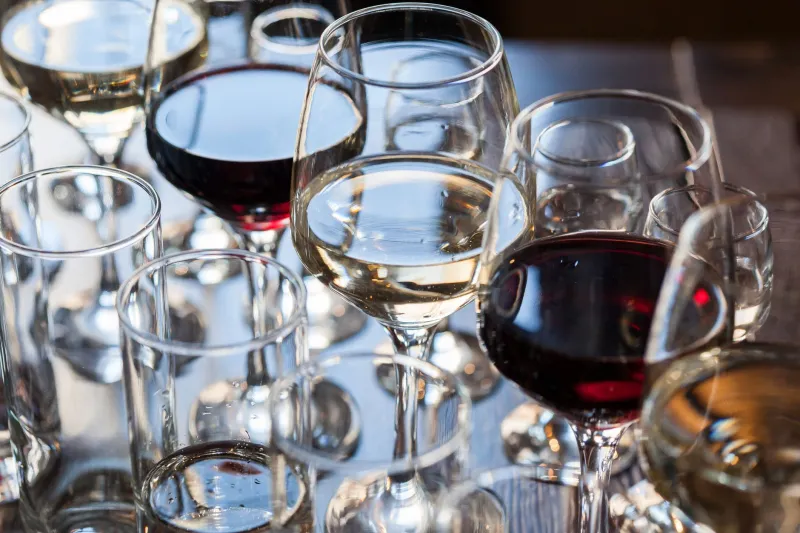
Most wine is experienced in isolation—a single bottle, a single evening, a single impression. This is entirely appropriate for the majority of drinking occasions. But it leaves something essential unexamined: the way a wine, and the winery that produces it, changes across time. A vertical tasting—the same wine drawn from multiple consecutive or selected vintages—corrects that omission in the most direct way possible. It is, in effect, a biography of a winemaker's thinking, rendered in glass.
For American wine, where many of the most interesting producers are still in the early chapters of that biography, the vertical tasting has particular urgency. The decisions being made right now—about farming philosophy, cellar intervention, stylistic direction—will be legible in retrospect in ways they cannot yet be in the present. Learning to read those decisions across time is one of the more sophisticated pleasures available to the wine enthusiast.
What a Vertical Tasting Actually Reveals
Before addressing the practical question of how to assemble and experience a vertical flight, it is worth being precise about what such a tasting can and cannot tell you.
A vertical tasting reveals, with unusual clarity, the influence of vintage variation—the year-to-year differences in climate, growing season, and harvest conditions that shape a wine's character before the winemaker makes a single decision. Tasting a Napa Valley Cabernet Sauvignon across five consecutive vintages will show you, in the most visceral possible terms, what a warm, dry year does to the wine's structure compared with a cooler, later harvest. No amount of reading about vintage conditions produces the same understanding.
Beyond climate, a vertical tasting reveals intentional change. When a winemaker adjusts their approach to oak aging, shifts from inoculated to indigenous yeast fermentation, or begins farming a portion of their vineyard organically, those decisions leave traces in the wine that accumulate across vintages into a legible record of evolution. The enthusiast who has tasted the same producer's Pinot Noir across ten vintages can often identify exactly when a significant philosophical shift occurred—not from reading winery notes, but from the evidence in the glass.
Sourcing Older Vintages: A Practical Framework
Assembling a meaningful vertical flight requires access to older bottles, which presents the first practical challenge. For many American producers, wines more than five or six years old are no longer available through the winery's direct channels, and retail availability diminishes sharply after the first year or two of release.
Several approaches have proven reliable for serious enthusiasts. The first is establishing a direct relationship with a producer early—joining a mailing list at the point of initial interest rather than waiting until a winery has achieved broader recognition. Many American producers offer library releases to long-standing mailing list members, providing access to older vintages at prices considerably below secondary market levels.
The second approach involves the secondary market directly: reputable auction houses, licensed wine retailers with established secondary inventory programs, and peer-to-peer platforms that operate within state legal frameworks. When sourcing older bottles through any secondary channel, provenance documentation and storage history are paramount. A wine that has been poorly stored will not reveal what a vertical tasting is designed to reveal—it will reveal only the consequences of heat damage or improper humidity.
A third, often underutilized approach is the winery visit itself. Many American producers maintain library stock that is available exclusively for tasting room experiences, particularly for guests who have made advance arrangements and expressed a specific interest in vertical exploration. Calling ahead and explaining your interest—rather than simply arriving and hoping—can unlock access to bottles that never appear on any public offering list.
Sequencing the Flight
The question of how to sequence a vertical tasting is more consequential than it might initially appear. There is no single correct answer, but there are clear principles.
The most common approach—tasting from youngest to oldest—has the advantage of moving from the wine's most immediate, fruit-forward expression toward its most evolved, tertiary character. This mimics the natural arc of a wine's development and allows the taster to experience the transformation in a forward direction. It also means that the youngest wine, typically the most accessible, establishes a baseline against which subsequent vintages can be measured.
The reverse sequence—oldest to youngest—is less intuitive but can be illuminating in specific circumstances, particularly when the winery in question has undergone a significant stylistic evolution. Beginning with the most recent vintage allows the taster to understand the winery's current philosophy before tracing backward to see how it developed.
For flights of more than six vintages, consider a non-linear approach: begin with a vintage from the middle of the range, move to the oldest, then the youngest, then fill in the gaps. This approach, favored by some professional tasters, prevents the palate from developing expectations based on a strict chronological progression and often surfaces surprises that a linear sequence would obscure.
Case Studies in American Vertical Storytelling
Certain American producers have, over the course of their histories, created vertical records of exceptional richness and instructiveness.
The evolution of Oregon Pinot Noir across the past two decades tells a story of increasing site specificity—early vintages from pioneering Willamette Valley producers often reflect a winemaker's ambition for the variety in general, while more recent vintages reveal a refined understanding of what individual blocks and sub-appellations contribute. A vertical flight spanning even ten years of production from an established Dundee Hills producer will make that evolution unmistakably apparent.
In California, the Chardonnay producers of the Sonoma Coast have undergone a well-documented stylistic shift away from heavily oaked, high-alcohol expressions toward wines of greater restraint and site transparency. A vertical tasting of a single producer's estate Chardonnay across that transition is not merely a wine experience—it is a document of a broader philosophical movement within American viticulture.
In the Finger Lakes, where Riesling production is still relatively young in institutional terms, even short verticals of five or six vintages reveal how producers are learning to work with the region's extreme vintage variation and how the vines themselves are maturing and deepening their expression of the underlying shale and limestone.
Taking Notes That Actually Mean Something
The value of a vertical tasting depends heavily on the quality of attention brought to it. This means taking notes—not merely impressionistic ones, but structured observations that allow for genuine comparison.
For each vintage in the flight, record color depth and hue, aromatic character (distinguishing primary fruit from secondary and tertiary development), structural elements (acidity, tannin, weight), and overall integration. Then, crucially, record what appears to have changed between vintages and, where possible, your hypothesis about why. Was the shift in structure a function of vintage conditions, or does it coincide with a known change in the winemaker's approach? Does the aromatic shift suggest earlier or later picking?
These notes, accumulated across multiple vertical experiences, become a genuinely valuable personal archive—a record not only of the wines but of the development of your own palate and interpretive capacity. That, ultimately, is what a vertical tasting offers that no other wine experience quite replicates: a way of watching both the wine and the winemaker grow, while recognizing that you are growing alongside them.
