Bottles as Heirlooms: Inside the American Home Wine Cellar Movement
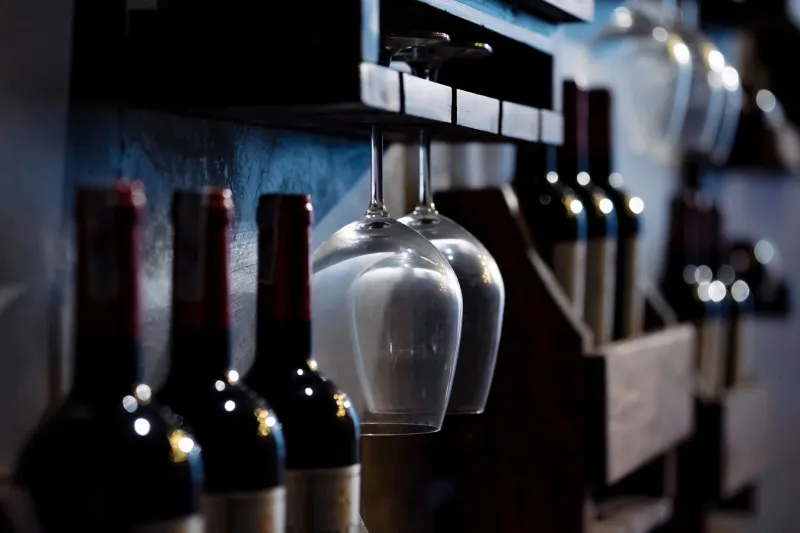
There is a particular kind of stillness that settles over a well-kept wine cellar. The hum of a climate-control unit, the faint scent of aged wood and stone, the orderly rows of bottles lying in repose — it is an environment that demands a certain reverence. For a growing community of American wine collectors, this is not a commercial storage facility or a restaurant's back room. It is home.
Over the past decade, the home cellar has emerged as one of the most compelling expressions of serious wine enthusiasm in the United States. What was once the exclusive province of the ultra-wealthy has evolved into a pursuit accessible to a far broader range of collectors — from the physician in suburban Chicago who converted a spare bedroom into a temperature-controlled vault, to the retired schoolteacher in Sonoma County who stores her most prized bottles beneath a modest craftsman bungalow.
The question worth asking is not simply how these collectors build their cellars, but why.
More Than Storage: The Philosophy Behind the Collection
For many collectors, the cellar represents something that transcends the practical matter of keeping wine at a stable fifty-five degrees Fahrenheit. It is an act of curation — a deeply personal editorial exercise in which each bottle reflects a decision, a memory, or an aspiration.
Margaret Holloway, a collector based in Portland, Oregon, began her cellar with a single case of 2012 Willamette Valley Pinot Noir purchased during a winery visit. Fourteen years later, her climate-controlled basement holds more than eight hundred bottles spanning producers from the Willamette Valley to the Finger Lakes.
"Every bottle in there has a story attached to it," she explains. "Some I bought because they were exceptional values. Others I purchased because I knew I'd want to drink them at a specific moment in my life — a milestone birthday, a child's wedding. The cellar is, in a sense, a map of where I've been and where I intend to go."
This narrative dimension of collecting is a theme that surfaces repeatedly among serious enthusiasts. The cellar is not a static repository; it is a living document.
The Infrastructure of Patience
Building a home cellar that genuinely serves a collection — rather than merely housing it — requires a meaningful investment in the right infrastructure. The variables involved are more numerous than most beginners anticipate.
Temperature consistency is paramount. Wine stored at fluctuating temperatures ages unevenly and may suffer irreversible damage. Most cellar experts recommend a stable range between fifty-five and sixty degrees Fahrenheit for long-term storage. Humidity, typically maintained between sixty and seventy percent, prevents corks from drying out and oxidizing the wine prematurely. Vibration, light exposure, and air circulation all enter the calculus as well.
For collectors working with existing spaces, purpose-built wine refrigeration units from manufacturers such as EuroCave, Liebherr, and Sub-Zero offer a reliable entry point. Units designed for serious collectors can accommodate anywhere from one hundred to over a thousand bottles, with dual-zone temperature controls for storing both reds and whites simultaneously.
For those willing to undertake a more substantial project, custom underground cellars — excavated beneath homes or constructed in climate-friendly outbuildings — represent the gold standard. These installations, which can range from fifteen thousand dollars for a modest build to well over a hundred thousand for an architecturally ambitious space, offer unparalleled stability and the visceral satisfaction of descending into a room purpose-built for the craft.
Building a Meaningful Collection Without Excess
Perhaps the most persistent misconception about wine collecting is that it requires an extravagant budget. In reality, the most thoughtful collections are defined not by the price of their contents but by the intentionality behind each acquisition.
Several principles guide collectors who build impressive cellars on measured budgets:
Buy regionally with depth. Rather than assembling a scattershot international collection, focusing on American wine regions allows collectors to develop genuine expertise and often access excellent values. Wines from the Willamette Valley, the Santa Rita Hills, the Finger Lakes, and Virginia's Monticello AVA regularly offer exceptional quality at prices that reward patience.
Purchase futures and library releases. Many American wineries sell futures — wine purchased before bottling — at prices below what the finished product will command at release. Similarly, library releases from established producers offer aged wines at fair market value, bypassing the secondary market entirely.
Think in terms of occasion, not quantity. A cellar of two hundred thoughtfully selected bottles will consistently outperform a warehouse of a thousand indiscriminate acquisitions. Collectors are well served by asking, at the point of purchase, precisely when and why they intend to open a given bottle.
The Prized Bottle: What Collectors Truly Treasure
When collectors speak of their most cherished bottles, the answers are rarely the most expensive ones. David Chen, a San Francisco-based collector with a 1,200-bottle cellar built into the hillside beneath his home, pauses when asked about his most prized possession.
"I have a 1997 Ridge Monte Bello that I bought at the winery for about sixty dollars," he says. "It's probably worth considerably more now, but that's not the point. I bought it on the day I got engaged. That bottle represents a moment I'll never get back. Opening it will be an event."
This sentiment — wine as a vessel for time itself — is perhaps the most profound motivation behind the home cellar movement. Unlike a painting or a piece of furniture, a bottle of well-cellared wine changes continuously. It is an artifact that evolves in dialogue with the collector who tends it.
The Cellar as Legacy
For a growing number of American collectors, the question of what happens to a cellar after them has become an increasingly serious one. Estate planning for wine collections — including proper valuation, documentation, and transfer strategies — has emerged as a niche but genuine field within the broader collecting world.
Some collectors are already thinking in generational terms, setting aside bottles intended explicitly for children or grandchildren. Others are working with auction houses and private brokers to ensure that carefully assembled collections find their way to enthusiasts who will appreciate them.
In this sense, the home cellar has become something genuinely new in American collecting culture: a space where patience, passion, and provenance converge. It is, as one Oregon collector described it with quiet satisfaction, "the one room in my house that gets better with time."
For those drawn to the pursuit, the first bottle is always the hardest to put down — and the easiest to keep.