What the Label Is Actually Telling You: A Confident Buyer's Guide to Wine Bottle Literacy
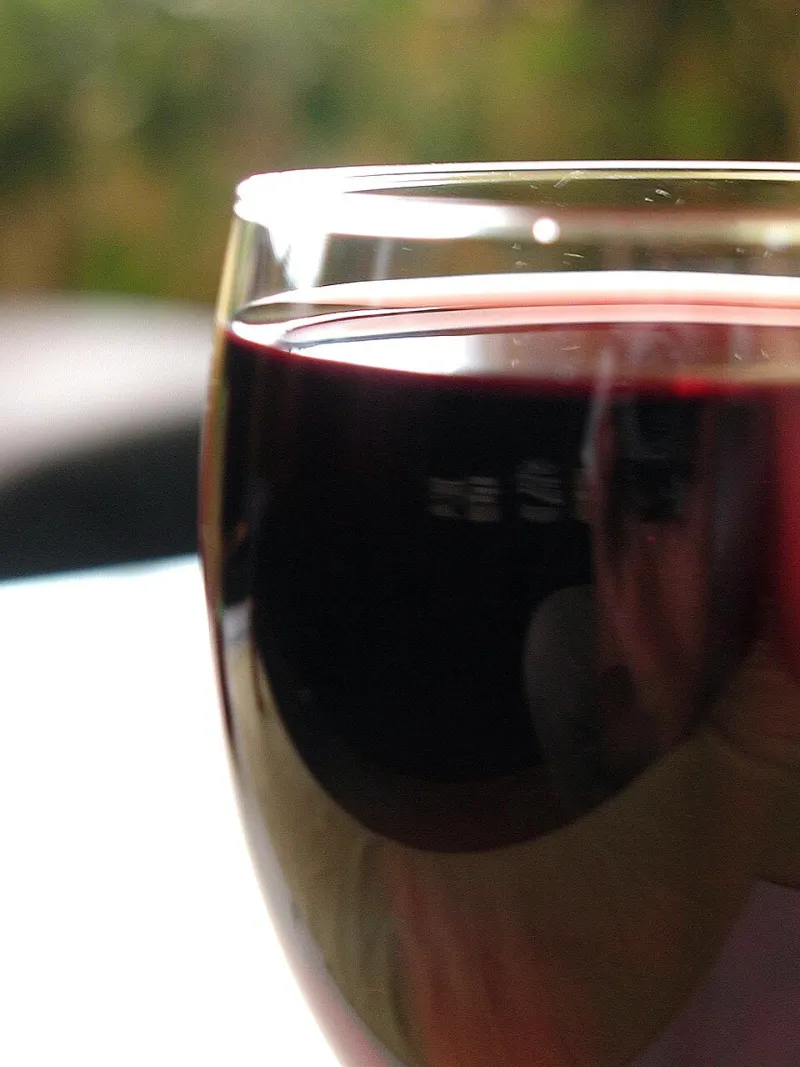
Photo: Paolo Neo, Public domain, via Wikimedia Commons
Stand in any well-stocked American wine shop for long enough and a familiar scene unfolds: a shopper lifts a bottle, rotates it slowly, studies the label with a furrowed brow, and ultimately reaches for the one with the most appealing artwork or the lowest price tag. It is an understandable response to what can feel like a wall of cryptic information. Yet that label — front and back — is one of the most densely packed communication tools in the food and beverage world. Once you understand its grammar, every bottle becomes far easier to evaluate before a single cork is pulled.
The Producer Name Is Your First Clue
The winery or producer name anchors everything else on the label, and it deserves more attention than it typically receives. Established producers in regions such as Sonoma, the Willamette Valley, or the Finger Lakes have reputations that precede them, and a quick search before you shop can tell you whether a name carries critical acclaim or simply aggressive marketing. Smaller, lesser-known producers are not automatically inferior — in fact, boutique American wineries often represent exceptional value — but understanding whether a name belongs to a family estate, a négociant operation, or a large commercial brand shapes how you interpret every other detail on the label.
Appellation: Geography as a Quality Signal
The appellation, or American Viticultural Area (AVA) designation, tells you precisely where the grapes were grown, and that geography carries enormous implications for style, quality, and authenticity. Under U.S. federal regulations, a wine bearing an AVA designation must contain at least 85 percent grapes grown within that named region. The more specific the appellation, the more meaningful that guarantee tends to be.
Consider the difference between a wine labeled simply "California" versus one bearing "Sta. Rita Hills" or "Rutherford." The broader the geographic claim, the wider the latitude a producer has in sourcing fruit, blending across distant regions, and managing costs through volume. A tightly defined sub-AVA, by contrast, reflects a commitment to a specific place and the particular character that place reliably produces. This is not a universal rule — some California-appellation wines are genuinely excellent — but specificity is almost always a marker worth noting.
Vintage Year: Reading the Calendar Correctly
The vintage year printed on a label indicates the harvest year for the grapes, and it matters considerably more in some regions and for some varietals than others. In climates with significant year-to-year weather variation — Oregon's Willamette Valley, for instance, or Washington State's Columbia Valley — a single exceptional growing season can elevate a wine dramatically, while a cool, wet harvest may produce a leaner, less concentrated result.
For everyday drinking wines, vintage variation is rarely a deciding factor. For wines intended for cellaring or for special occasions, however, consulting a vintage chart for the relevant region adds a layer of confidence to your purchase. Reputable wine publications and trade organizations publish these resources annually, and cross-referencing a label's year against a known strong vintage takes only moments.
Varietal Labeling and What the Percentages Mean
American wine law requires that a wine labeled with a single grape variety — Cabernet Sauvignon, Chardonnay, Pinot Noir — contain at least 75 percent of that variety. That remaining 25 percent can be anything the winemaker chooses, which means that two bottles sharing the same varietal designation may taste quite different depending on what fills the balance.
Some producers disclose their full blend on the back label, either out of transparency or pride in their assemblage. When you see a detailed breakdown — "78% Cabernet Sauvignon, 14% Merlot, 8% Petit Verdot" — you are looking at a winery that regards its blending decisions as part of its identity. That level of disclosure is generally a positive signal about the producer's overall approach to communication and quality.
Alcohol Content as a Style Indicator
The alcohol by volume (ABV) percentage, required by law on every label, is a surprisingly useful proxy for wine style. Higher alcohol levels — above 14.5 percent — typically indicate a riper, fuller-bodied wine harvested at greater sugar concentration, a style associated with warmer growing regions and certain winemaking philosophies. Lower ABV wines, particularly those below 13 percent, tend toward greater freshness, higher acidity, and more restrained fruit expression.
Neither style is inherently superior, but knowing your preference allows you to use ABV as a quick filter at the shelf, especially when you are exploring an unfamiliar producer or region.
Back Label Language: Marketing Copy or Genuine Information?
The back label occupies a curious space between consumer education and promotional writing. Some back labels offer genuinely useful tasting notes, fermentation details, suggested food pairings, and serving recommendations. Others are composed almost entirely of romantic prose about rolling hillsides and family heritage.
Train yourself to look past the evocative language and toward specific, verifiable claims: grape sourcing details, aging vessel information ("aged 18 months in French oak"), and technical data such as residual sugar levels or harvest dates. The more concrete the information, the more seriously the producer regards the informed consumer. Vague poetry, while pleasant to read, tells you very little about what is actually inside the bottle.
Estate Bottled, Reserve, and Other Designations
Certain terms carry legal weight in the United States; others do not. "Estate bottled" is among the most meaningful, indicating that the winery grew the grapes on land it owns or controls, crushed and fermented the wine, and bottled the finished product — all within the same appellation. It is a designation that speaks directly to provenance and consistency.
"Reserve," by contrast, has no legal definition under U.S. wine law. Any producer may use it freely, and it appears on bottles ranging from genuinely exceptional, limited-production wines to standard commercial releases dressed up for shelf appeal. Context and producer reputation must guide your interpretation here.
Similarly, terms such as "Old Vine," "Barrel Select," and "Winemaker's Choice" carry no regulatory requirement. They may describe something genuinely meaningful about the wine's production, or they may simply reflect the marketing department's vocabulary. When in doubt, look for corroborating detail elsewhere on the label or turn to trusted critical sources.
Putting It All Together at the Shelf
Reading a wine label fluently is less about memorizing a rulebook and more about developing a consistent habit of attention. Producer identity, appellation specificity, vintage year, varietal composition, alcohol level, and the presence of legally defined quality terms each contribute a piece of a larger picture. Together, they tell a story about where a wine came from, how it was made, and what the person who made it was trying to express.
The most rewarding aspect of this skill is what it replaces: the reflexive reach for a familiar brand name or a reassuring price point. When you can read a label with genuine comprehension, you are no longer relying on proxies for quality. You are engaging directly with the wine, long before the first pour.