Curating Your Own Cellar: How Sommeliers Think About a Home Wine List
Walk into the back office of a serious sommelier and you will rarely find a list organized by grape variety alone. More likely, you will discover a system built around rhythm — the rhythm of a meal, a season, a guest's expectations. That same disciplined thinking, stripped of its professional formality, translates remarkably well to the home collector who wants more than a random assortment of bottles gathering dust on a rack.
Building a personal wine list is not a matter of budget or expertise. It is a matter of asking the right questions before you ever uncork a single bottle.
Begin With Occasion, Not Variety
The most common mistake home collectors make is organizing their cellar the way a wine shop organizes its shelves — by region or grape. Barolo sits with Barolo. Chardonnay gathers beside Chardonnay. The logic is tidy, but it rarely reflects how wine is actually consumed at home.
Sommeliers, by contrast, think in moments. What will guests want to sip on the porch before dinner? What bottle deserves the long, quiet evening after a meaningful meal? What do you reach for on a Tuesday when nothing in particular is being celebrated?
Consider sorting your collection into three working categories: everyday bottles, occasion wines, and cellar-worthy investments. Everyday bottles — typically priced between fifteen and thirty dollars — should constitute the largest portion of your collection, perhaps sixty percent. These are the workhorses: approachable, food-friendly, and satisfying without demanding attention. Occasion wines occupy a middle tier, reserved for dinner parties, anniversaries, or a Sunday roast that merits something a little more considered. Investment bottles, whether acquired for aging or future gifting, round out the remainder.
This three-tier logic ensures that your cellar functions as a living resource rather than a museum.
Seasonal Architecture
A skilled sommelier shifts a wine program with the calendar. Heavy, tannic reds that comfort in January feel oppressive by July. Crisp, high-acid whites that sing in August can seem thin and austere come November.
Applying this seasonal awareness at home requires only modest planning. In spring and summer, weight your collection toward whites, rosés, and lighter reds — think Pinot Noir from Oregon's Willamette Valley, dry rosé from California's Central Coast, or a Grüner Veltliner for warm evenings on the deck. As autumn arrives and the table shifts toward roasted vegetables, braised meats, and richer fare, Syrah, Zinfandel, and Cabernet Franc earn their place. Winter invites the deepest bottles: aged Napa Cabernet Sauvignon, a structured Nebbiolo, or a fortified wine for the fireside.
Building with the seasons also prevents the common frustration of opening a wine before it is ready, or worse, forgetting about a bottle that has passed its window.
The Food Pairing Logic Professionals Use
One of the most transferable tools in a sommelier's kit is the concept of structural pairing — matching a wine's weight, acidity, and tannin to the characteristics of the food rather than relying on memorized rules. "White with fish, red with meat" is a starting point, not a framework.
A practical approach for the home collector is to think about the sauces and preparations you cook most frequently, then build backward. If your kitchen leans toward bright, acidic dishes — citrus-dressed salads, tomato-based pastas, grilled fish with herb sauces — you want a cellar stocked with high-acid wines: Sauvignon Blanc, Vermentino, Barbera, Sangiovese. If your cooking runs richer, toward cream sauces, slow-braised proteins, and butter-finished vegetables, fuller-bodied whites and structured reds will serve you better.
This approach also naturally creates varietal diversity, one of the hallmarks of a thoughtful professional wine list. A cellar that reflects your actual cooking is a cellar with genuine range.
Building Verticals Without a Wine Budget
Vertical tastings — comparing multiple vintages of the same wine — are among the most educational experiences a wine enthusiast can pursue. They reveal how a wine evolves, how a producer's style shifts over time, and how the vintage itself shapes what ends up in the glass.
The assumption that vertical collections require significant investment is worth challenging. Many American producers, particularly smaller family estates and emerging regional wineries, offer wines at accessible price points that are nonetheless built to age. Picking up two or three bottles of a wine you genuinely enjoy — one to drink now, one to open in three years, one to save for five — is the beginning of a meaningful vertical without requiring a dedicated climate-controlled cellar or a substantial outlay.
Over time, these intentional purchases become a record of your own palate. A bottle of Paso Robles Zinfandel from 2019 that you open in 2026 tells you something not just about the wine, but about how your relationship with that variety has evolved.
Practical Organization for Real Homes
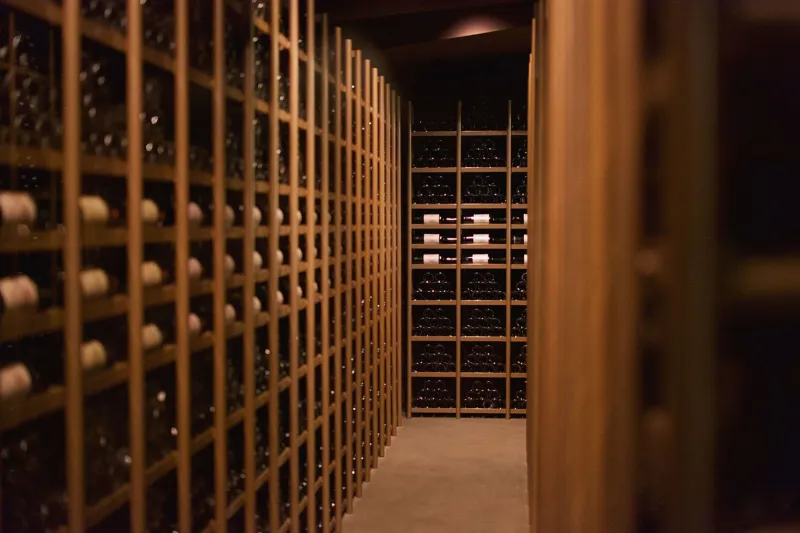
Not every enthusiast has a cellar. Most Americans store wine in a spare corner, a temperature-controlled cabinet, or a modest freestanding rack. The physical limitations of a home collection make thoughtful curation even more important — every slot carries weight.
A few organizational principles borrowed from professional programs prove useful here. First, keep an inventory, even a simple one. A shared note on your phone that lists what you have, where it is, and when you acquired it takes ten minutes to establish and prevents the disorienting experience of reaching for a bottle you drank six months ago. Second, rotate deliberately. Place bottles you intend to drink soon at the front or the bottom of a rack, and reserve the harder-to-reach positions for wines meant to rest. Third, set a modest acquisition rhythm — perhaps four to six bottles per month — to keep the collection fresh without overwhelming either the storage space or the budget.
The Cellar as Personal Narrative
At its finest, a home wine collection is not merely a supply of bottles. It is an autobiography of taste — a record of the regions you have explored, the producers who have moved you, and the occasions you have chosen to mark with something memorable.
Sommeliers spend careers learning to read a wine program and understand the philosophy behind it. Your home cellar deserves the same intentionality, even if the scale is intimate and the audience is simply you and the people you love to share a table with.
Start with what you drink. Build around how you cook and how you gather. Let the seasons guide your selections and the years deepen them. The result will be a collection that does what every great wine list should do: make the next bottle feel like exactly the right choice.