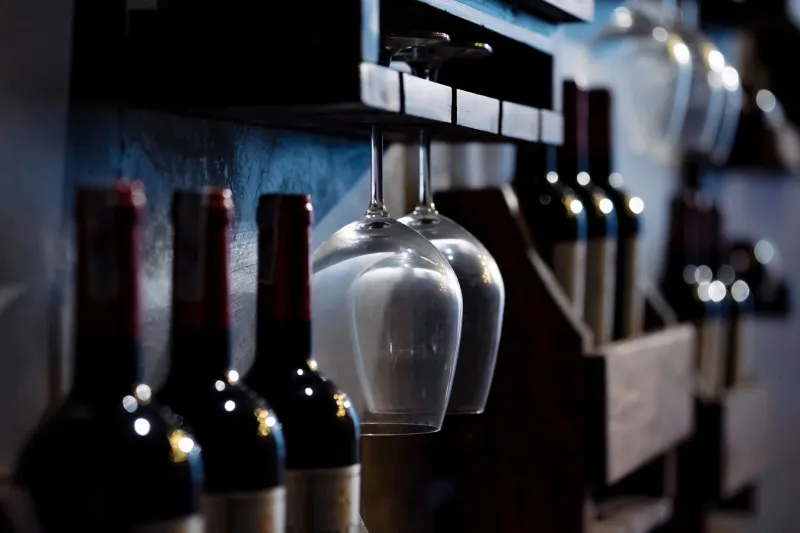
Small Batches, Big Ambitions: Inside America's Flourishing Micro-Winery Movement
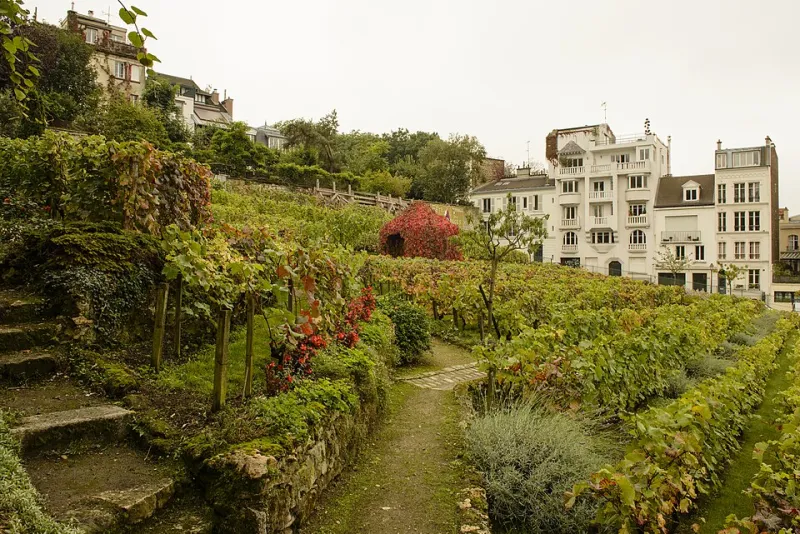
Photo: Son of Groucho from Scotland, CC BY 2.0, via Wikimedia Commons
There is a particular kind of quiet that settles over a converted barn in the Willamette Valley on a November evening. The harvest is finished. Fermentation vessels hum softly. And a winemaker — who, until three years ago, spent her days as a software engineer in Portland — stands before a row of second-hand barrels, tasting from a pipette with the focused attention of someone who has staked something real on what she finds inside.
This is not a scene from a major commercial operation. There are no tasting room staff, no distributor contracts, no marketing department. Production totals fewer than 300 cases annually. And yet, the wine she is producing — a Pinot Noir sourced from a small family vineyard just twenty minutes away — has earned the kind of devoted following that established wineries spend decades and considerable resources attempting to cultivate.
She is, in the parlance of the trade, a garage winemaker. And she is far from alone.
Defining the Movement
The term "garage winery" was borrowed loosely from the French concept of vin de garage, a phrase that emerged in Bordeaux during the 1990s to describe iconoclastic producers who rejected the grand château system in favor of micro-scale, obsessively hands-on winemaking. In the American context, the spirit is similar, but the geography and motivation are distinctly homegrown.
Across California's Central Coast, the rolling hills of the Finger Lakes, the emerging appellations of Virginia, and the high-desert vineyards of New Mexico, small-scale producers are crafting wines in facilities that bear little resemblance to the polished estates that dominate wine tourism brochures. A converted two-car garage in Sonoma County. A basement cellar in the Hudson Valley. A repurposed dairy barn outside of Walla Walla, Washington. These are the workshops of a movement that values intention over infrastructure.
What unites these producers is not geography or grape variety, but a shared philosophy: that exceptional wine begins with an intimate relationship between the winemaker and the fruit, and that commercial scale is often the enemy of that relationship.
What Drives Someone to Start This Way
For many micro-producers, the path into winemaking begins not with a business plan but with a compulsion. David Morales, who produces roughly 150 cases of Tempranillo and Grenache from his property in the Texas Hill Country, describes his entry into the craft with characteristic directness. "I had been making wine in my garage for home use for about six years before I thought seriously about selling it," he explains. "The moment I started thinking about it as a business, I almost stopped. I didn't want the romance to become obligation."
That tension — between passion and commerce, between art and enterprise — is central to the micro-winery experience. Many producers deliberately limit their output not because they lack the means to expand, but because they recognize that growth carries a cost. Larger production runs demand compromises: sourcing fruit from multiple vineyards, standardizing processes, hiring staff unfamiliar with the winemaker's particular vision. For those who entered the craft in pursuit of something singular, these are compromises worth resisting.
Others arrive at micro-production through the vineyard itself. Families who have farmed land for generations but never processed their own fruit sometimes make the decision to retain a portion of their harvest and hire or become a small-scale winemaker. In these cases, the garage winery becomes an act of agricultural self-determination — a refusal to surrender the story of a specific piece of land to a larger brand that may blend it into anonymity.
The Regulatory Landscape
Operating a licensed winery in the United States, even at the smallest scale, requires navigating a patchwork of federal, state, and local regulations that can be formidable for those without legal or industry guidance. Federal licensing through the Alcohol and Tobacco Tax and Trade Bureau (TTB) is mandatory for any commercial operation, and state licensing requirements vary considerably. In some states, zoning restrictions complicate the establishment of production facilities on residential properties, making the literal "garage winery" a more aspirational than literal designation in certain markets.
Despite these hurdles, the regulatory environment has become meaningfully more hospitable to small producers over the past decade. A number of states have introduced farm winery licenses or cottage winery designations that reduce the compliance burden for low-volume operations. Direct-to-consumer shipping laws — still inconsistent across states, but expanding — have allowed micro-producers to build national mailing lists without depending on the traditional three-tier distribution system, which historically favored larger operations capable of maintaining consistent supply.
For many garage winemakers, the direct relationship with customers is not merely a workaround for distribution challenges — it is a defining feature of the enterprise. Mailing list allocations, cellar door pickups, and small-group tasting events create a form of community that feels genuinely different from the transactional experience of purchasing wine at retail.
Influence Beyond the Barrel
It would be easy to dismiss micro-producers as a charming but marginal phenomenon — artisanal curiosities operating at a scale too small to register in any meaningful commercial conversation. That reading, however, misunderstands the nature of their influence.
Garage winemakers have historically served as laboratories for the broader industry. Techniques now considered mainstream — extended maceration, whole-cluster fermentation, minimal-intervention cellar work — were often pioneered or popularized by small producers willing to experiment precisely because they had little to lose by departing from convention. Their wines, circulated among collectors and sommeliers through word of mouth and small allocations, have repeatedly shifted critical conversation about what American wine can be.
There is also the matter of regional credibility. In emerging appellations, where large commercial investment may be slow to arrive, micro-producers frequently establish the first serious track record for a given area's potential. A handful of dedicated small producers making compelling wine from Virginia's Shenandoah Valley or from the high-elevation sites of Colorado's Grand Valley can do more to establish a region's reputation than years of promotional effort by an appellation board.
A Different Kind of Ambition
What strikes most observers who spend time with micro-producers is not their scrappiness — though that quality is certainly present — but the particular shape of their ambition. These are not winemakers who lack the desire to be taken seriously. They are winemakers who have defined seriousness differently.
Seriousness, in this context, means knowing the name of the farmer who grew your fruit. It means tasting from the barrel weekly rather than quarterly. It means releasing a wine only when it is ready, regardless of what the calendar suggests. It means accepting that 200 cases of something genuinely exceptional is a more meaningful achievement than 20,000 cases of something merely competent.
For the wine enthusiast willing to seek them out — through mailing lists, regional wine trails, or the recommendations of a knowledgeable retailer — these small operations offer something increasingly rare in a crowded market: a bottle with a traceable human story, made by someone who cared about it more than they cared about scaling it.
In a landscape where authenticity is frequently marketed and rarely delivered, that distinction is worth more than the label will ever say.