Forgotten and Found: The Surprising Magic of Wines You Never Meant to Age
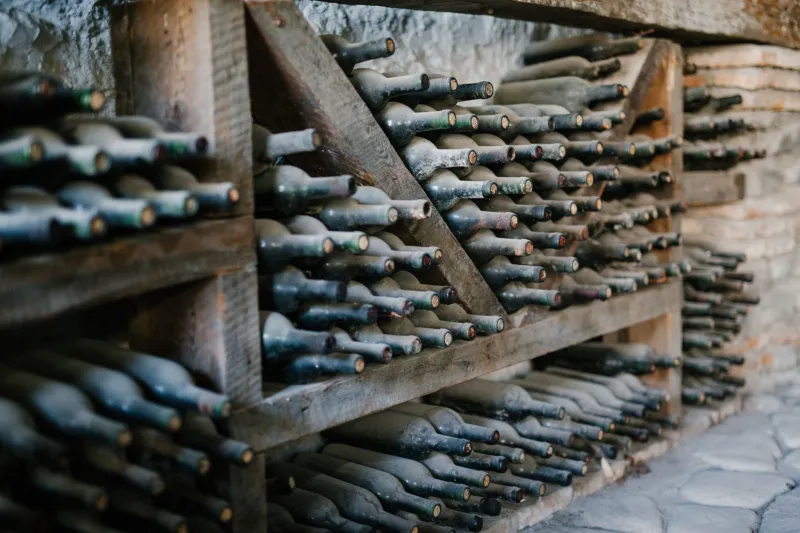
There is a particular kind of joy reserved for the unplanned discovery. Not the satisfaction of opening a bottle you have tracked on a spreadsheet for six years, consulting vintage charts and tasting notes along the way, but the quiet astonishment of pulling something from the back of a closet shelf and realizing, with genuine surprise, that time has done its work without your supervision. In the world of wine, this phenomenon — accidental cellaring — may be the most honest form of aging there is.
Remove the pressure of investment, the weight of critical scores, and the anxiety of optimal drinking windows, and something remarkable tends to happen: wine simply becomes itself.
The Tyranny of Intentional Collecting
American wine culture has, in many ways, cultivated a deeply transactional relationship with aging. Enthusiasts consult point scores before purchasing. They photograph labels for tracking apps. They debate drinking windows in online forums with the seriousness of financial planners. All of this is understandable — fine wine represents a meaningful expenditure, and the desire to protect that investment is entirely rational.
Yet this very vigilance can quietly undermine the experience. A bottle known to be "ready" carries expectation into the glass. A wine purchased for a specific occasion arrives burdened with the pressure of that moment. The drinker is no longer encountering the wine; they are auditing it.
Accidental cellaring sidesteps all of this. When a bottle is simply forgotten — tucked behind a case of something else, left in a vacation rental bag, or placed in a cool corner of a garage without ceremony — it ages in a kind of freedom. And the drinker who rediscovers it years later approaches it with genuine curiosity rather than a checklist.
What Forgetting Actually Does
From a purely practical standpoint, a wine stored consistently at moderate temperatures — even in an imperfect environment like a closet or basement — will continue to evolve in ways that parallel proper cellar aging, provided it avoids dramatic fluctuations in heat and humidity. The chemistry does not require your attention. Tannins soften on their own schedule. Secondary aromas develop quietly. Fruit that once dominated retreats, allowing earthier, more complex notes to emerge.
What changes is not the wine's chemistry but the drinker's relationship to it. Without the scaffolding of a tasting note written at release or a projected drinking window supplied by a critic, the person opening that forgotten bottle is forced into a more direct encounter with what is actually in the glass. There is no expectation to satisfy or disappoint. There is only the wine.
This, it turns out, is an extraordinarily clarifying way to learn what you actually enjoy.
Stories from the Back of the Shelf
Speak to wine lovers long enough, and you will begin to collect these stories. A couple in Portland, Oregon, discovered a half-case of Willamette Valley Pinot Noir behind holiday decorations during a home renovation — a wine purchased casually at a winery tasting room nearly a decade earlier, during a weekend trip neither of them remembered particularly vividly. The bottles, stored in a cool interior closet, had evolved into something silky and contemplative, far removed from the bright, exuberant wine they recalled sipping on a sunny Saturday afternoon.
"We hadn't thought about it once," the husband noted. "And that was probably the whole point."
A similar account comes from a Chicago collector who discovered a mixed case of California Cabernet Sauvignon and Zinfandel from a small Sonoma producer while clearing out a storage unit. The wines, purchased at a charity auction years prior and promptly forgotten, had aged into a complexity that surprised even someone accustomed to tracking far more prestigious bottles. "I've spent a lot of money trying to find wines that drink like those did," she observed. "And I got there entirely by accident."
These stories are not outliers. They are, in fact, a quiet tradition within American wine culture — one that rarely receives the attention lavished on meticulously managed cellars, but which may produce equally memorable experiences.
Humility as a Tasting Tool
There is an argument to be made that accidental cellaring teaches something that no tasting course or critical guide can fully replicate: humility. When you approach a bottle without knowing what it is supposed to taste like at this stage of its development, you are forced to trust your own palate rather than calibrate your experience against an external authority.
This is not a trivial skill. Much of the anxiety that surrounds wine — the hesitation to declare a preference, the deference to critics and sommeliers — stems from a learned distrust of one's own sensory experience. Accidental cellaring, by stripping away the critical apparatus, returns the drinker to something more fundamental: the simple question of whether the wine in the glass is pleasurable, interesting, or moving.
Answering that question without outside guidance is, in its own way, the most sophisticated thing a wine lover can do.
The Disconnect Between Acclaim and Personal Discovery
It is worth noting that the wines which emerge most memorably from accidental cellaring are rarely the ones that arrived with the heaviest critical endorsement. They are more often regional bottles purchased on a whim, second labels from well-regarded producers, or wines from less fashionable varieties that simply happened to be in the right place at the right time.
This disconnect between critical acclaim and personal discovery is one of wine's most instructive recurring lessons. A ninety-five-point Napa Cabernet purchased with great deliberation can disappoint. A modest Rhône-style blend from a Virginia producer, forgotten in a coat closet, can astonish. The score did not predict the experience. The forgetting did.
This is not an argument against critical guidance — it remains a useful tool for navigating an enormous and complex marketplace. But it is a reminder that personal discovery operates by different rules than professional evaluation, and that the most resonant wine experiences are often the ones that arrive unannounced.
Embracing the Unplanned
For those inclined to experiment, the lesson of accidental cellaring suggests a simple and pleasurable exercise: purchase a modest case of wines you find genuinely appealing, store them somewhere reasonably cool and dark, and deliberately choose not to track them. No app. No tasting notes. No projected drinking windows. Set a calendar reminder for five years from now, and then forget entirely.
What you open when that reminder arrives will not be the wine you remembered buying. It will be something older, quieter, and in all likelihood more interesting — shaped by time rather than expectation, and all the more honest for it.
At Greenwood Winery, we believe that wine's deepest rewards are rarely found in the most deliberate places. Sometimes the most eloquent bottle is the one you stopped thinking about entirely — the one that was quietly becoming itself while you were busy looking elsewhere.