The Productive Failure: How America's Most Inventive Winemakers Turn Mistakes Into Mastery
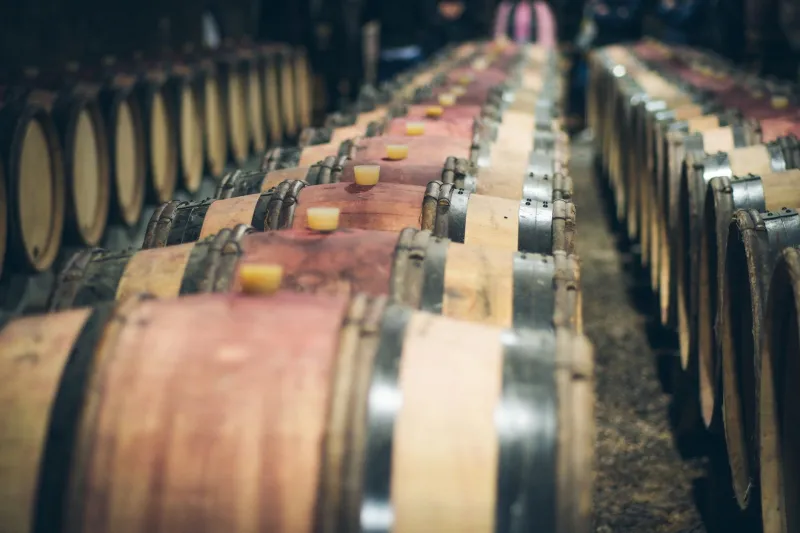
There is a small tank in the corner of a Willamette Valley cellar that its winemaker refers to, with equal parts affection and embarrassment, as the "education barrel." It contains a Grüner Veltliner grown at an elevation that was almost certainly too high, harvested a week too late, and fermented in a vessel that, in retrospect, was entirely wrong for the variety. It will never be bottled under a label anyone would recognize. It will, in all likelihood, be blended quietly into something else or simply poured out. And yet, the winemaker in question credits that single misguided experiment with teaching her more about cold-climate phenolic development than a decade of successful harvests combined.
This is the paradox at the heart of American wine's creative renaissance: the bottles that fail are often the ones that matter most.
What Experimentation Actually Looks Like in the Cellar
In the popular imagination, winemaking experimentation conjures images of bold, marketable innovation—a new appellation being pioneered, an ancient variety being revived for a receptive audience. The reality is considerably less glamorous. Genuine experimentation in the cellar is iterative, unglamorous, and frequently produces wine that no reasonable person would want to drink.
At a boutique producer in the Santa Ynez Valley, the winemaker sets aside a small percentage of each harvest specifically for what he calls "adversarial winemaking"—deliberately introducing variables that his conventional production would never tolerate. Extended skin contact on white varieties. Indigenous yeast fermentations in vessels that haven't been used in years. Whole-cluster pressing of grapes that conventional wisdom insists should be destemmed. The results are, by his own admission, inconsistent at best.
"Maybe one in five of those experiments produces something I'd want to share with anyone," he explains. "But that one bottle changes how I think about the other four. You can't get that education any other way."
This philosophy—that the ratio of success to failure is less important than the quality of the information extracted from each outcome—is increasingly common among American producers who have moved beyond the initial imperative to prove their credibility and into a more settled, curious phase of their careers.
The Varieties Nobody Asked For
Among the most instructive failures in American wine are those involving grape varieties that the market neither requested nor, in many cases, wanted. The story of Albariño in California, Tannat in Texas, and Blaufränkisch in the Finger Lakes is largely a story of initial commercial indifference met with persistent winemaker conviction.
A producer in the Lodi appellation spent three consecutive vintages attempting to coax something compelling from a small block of Verdelho planted as an afterthought by the vineyard's previous owners. The first vintage was thin and oxidized. The second was technically sound but entirely characterless. The third—produced after the winemaker had spent considerable time studying how the variety behaves in the Douro Valley—was a revelation: textured, saline, and unlike anything else being produced in the region.
"If I'd quit after the second vintage, which I almost did, I never would have understood what that block was capable of," she says. "The failure wasn't in the wine. The failure was in my understanding of the grape."
This distinction—between a wine that fails and a winemaker who hasn't yet learned enough—is one that the most thoughtful producers in American wine return to repeatedly. Failure, in this framing, is not a verdict on the wine. It is a diagnostic tool.
When the Market Disagrees with the Winemaker
Not all experimental failures are technical. Some of the most instructive setbacks in American wine have involved bottles that were technically accomplished but commercially invisible—wines that the winemaker believed in completely and the market politely declined to purchase.
A small producer in Sonoma County released a skin-contact Chardonnay in a vintage when the category was still considered eccentric by the majority of American wine buyers. The wine sold poorly. Distributors were unenthusiastic. The winemaker's business partner suggested abandoning the project entirely.
He did not. Instead, he used the commercial failure as an opportunity to refine the wine on his own terms, without the pressure of immediate market validation. Three vintages later, the same wine had become the winery's most discussed release—not because the market had been educated, though it had, but because the winemaker had been given the time and adversity necessary to make the wine genuinely better.
"The first version was a statement," he reflects. "The version we make now is actually a wine. The failure gave me the space to figure out the difference."
What Failure Looks Like From the Outside
For the wine enthusiast visiting a tasting room or reading a producer's notes, the evidence of past failures is rarely visible. What is visible—the confident pour, the polished tasting notes, the unhesitating description of a wine's character—is the product of those failures, not their absence.
Learning to read that subtext is one of the more rewarding skills a serious wine drinker can develop. When a winemaker describes a variety as "one we've been working to understand for several years," that is often a compressed history of failed experiments. When a producer speaks with particular precision about the timing of a specific intervention in the cellar, they are frequently describing a precision earned through having gotten it wrong before.
The American wine producers most worth following are, almost without exception, those who speak about their failures with the same fluency and detail they bring to their successes. The courage to experiment is inseparable from the courage to fail visibly—and to let those failures reshape the work.
Building a Relationship With a Producer's Curiosity
For collectors and enthusiasts who want to engage more deeply with American wine, the experimental batches and unusual releases that emerge from this culture of productive failure offer a particular kind of access. These are often the wines that most directly reveal a winemaker's thinking—unmediated by commercial expectation or the accumulated refinement of a flagship label.
Many American producers offer library or experimental releases through mailing lists or tasting room allocations that never reach retail distribution. Seeking these out is not simply a matter of acquiring something rare. It is an opportunity to taste the work in progress—to understand a winery's direction not from its finished statements but from the questions it is still asking.
The education barrel in that Willamette Valley corner may never produce a wine worth drinking. But the winemaker who tends it, and the curiosity that compels her to keep filling it, are producing some of the most interesting Pinot Noir in the Pacific Northwest. That is not a coincidence. It is the point.