Sealed with Intention: What a Winemaker's Closure Choice Tells You About Their Vision for Your Glass
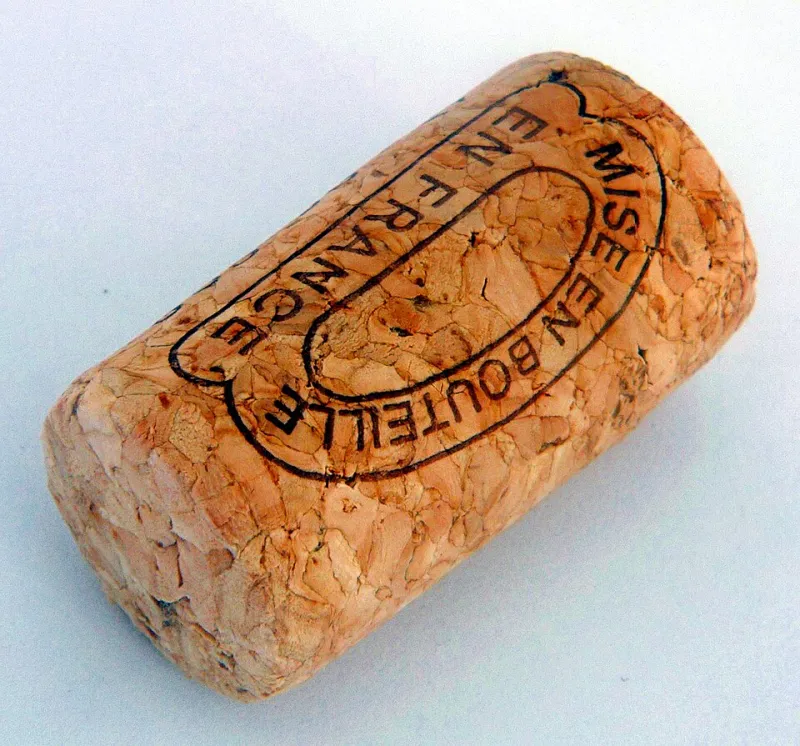
Photo: David Monniaux, CC BY-SA 3.0, via Wikimedia Commons
Most wine drinkers give little thought to what sits between the glass and the wine inside it. The ritual of the corkscrew, or the satisfying twist of a metal cap, happens in a matter of seconds before attention shifts entirely to the pour. Yet that closure—whether a cylinder of aged Portuguese bark, a molded piece of synthetic polymer, or an aluminum screw cap—represents one of the most deliberate decisions a winemaker makes. It is a choice that reflects values, not just logistics.
The debate over wine closures has simmered in American winemaking circles for decades, intensifying as the industry has matured and diversified. It touches on questions of tradition, environmental responsibility, the science of oxygen transmission, and the deeply personal question of how a winemaker envisions their wine's life in your cellar. To understand the closure is to understand something essential about the wine it protects.
The Case for Natural Cork: Tradition as a Living Argument
Natural cork has sealed wine bottles for more than three centuries, and its defenders within American winemaking are neither nostalgic nor naive. They are, in many cases, scientifically deliberate. Cork is harvested from the bark of the Quercus suber oak, primarily in Portugal and Spain, without felling the tree—a renewable process that supports one of the Mediterranean's most biodiverse ecosystems. For winemakers with sustainability at the center of their practice, that ecological dimension matters considerably.
Beyond environmental considerations, natural cork's most compelling argument is its behavior over time. Cork is not perfectly uniform; each piece transmits oxygen at a slightly different rate, which means that two bottles from the same case, sealed with different corks, may evolve along subtly distinct paths. For winemakers who view aging as a form of collaboration between their craft and the passage of time, this variability is not a flaw—it is a feature. The slow, micro-oxidative exchange that cork permits is widely credited with allowing wines to develop the layered complexity that serious collectors seek.
The acknowledged liability is cork taint, caused by the compound 2,4,6-trichloroanisole, or TCA. Estimates of TCA-affected bottles have ranged from two to seven percent historically, though improved quality control in cork production has reduced that figure meaningfully. Still, for a winemaker releasing a limited production that represents years of careful farming and cellar work, even a small percentage of compromised bottles is a painful consideration.
Screw Caps and the Courage to Break Convention
When American winemakers began adopting aluminum screw caps—technically known as Stelvin closures—in earnest during the early 2000s, many encountered resistance that had little to do with science. The screw cap carried associations with inexpensive, mass-market wine, and in a country where the cultural theater of uncorking still carries considerable weight, the optics were complicated.
A growing number of American producers, particularly in the Pacific Northwest and among newer California boutique labels, have moved past those associations entirely. Their reasoning is grounded in chemistry: screw caps provide an essentially airtight seal, eliminating TCA contamination and offering highly consistent, predictable aging conditions. For wines intended to be consumed within a few years of release—aromatic whites, fresh rosés, lighter reds built for immediate pleasure—that consistency is a genuine virtue.
The deeper philosophical statement made by a screw cap is one of transparency and consumer-centeredness. Winemakers who choose this closure are often communicating that they have no interest in the performance of tradition for its own sake. They want the wine to arrive in your glass exactly as they intended, without the lottery element that natural cork introduces. In regions like Washington State, where producers have built their reputations on precision viticulture and technical rigor, this approach is coherent and principled.
The legitimate question for cellar-minded collectors is whether screw caps support long-term aging as effectively as cork. The evidence here is still accumulating. Some studies suggest that wines under screw cap can develop reductive qualities over extended aging—a sulfurous character that emerges in the absence of sufficient oxygen exposure. Others show that high-quality Stelvin closures with specific liner compositions can be calibrated to permit controlled oxygen transmission, narrowing the practical gap between cap and cork for age-worthy wines.
Synthetic Closures: The Middle Ground and Its Discontents
Synthetic corks occupy a curious position in this conversation. Designed to mimic the form of natural cork while eliminating TCA risk, they appealed initially to producers who wanted the ceremonial experience of uncorking without the anxiety of taint. In practice, their reputation has been complicated by inconsistent oxygen transmission rates and a tendency, in some formulations, to allow too much air into the bottle over time—accelerating oxidation in wines intended for longer cellaring.
That said, the technology has evolved. Newer generations of synthetic closures, including co-extruded and micro-agglomerated formats, have addressed many of the earlier performance concerns. Some American producers use them specifically for wines designed to be opened within two to three years, where the closure's limitations are largely irrelevant and its TCA-free reliability is a straightforward advantage.
The philosophical position of the synthetic closure is, in some ways, the most ambiguous of the three. It neither embraces the tradition and ecological narrative of natural cork nor makes the clean, modernist statement of the screw cap. For that reason, it tends to be chosen on functional grounds rather than as an expression of winemaking identity—which is itself a kind of philosophy.
Reading the Closure as a Text
When you reach for a bottle, the closure offers its own form of label literacy. A natural cork on a structured red from a small California producer signals that the winemaker is betting on time—that they believe the wine will reward patience and that the micro-oxidative environment of cork will carry it toward something more interesting than it is today. A screw cap on a Willamette Valley Pinot Gris is a statement of confidence in the wine's immediate expression and a commitment to consistency over ceremony. A synthetic closure on a mid-range American Merlot suggests a practical decision made with the wine's likely consumption window in mind.
None of these choices is inherently superior. Each reflects a coherent set of values and intentions, and understanding them changes the nature of the conversation between winemaker and drinker. The bottle, after all, is not merely a container—it is a proposal. The closure is where that proposal begins.
At Greenwood Winery, we believe that every element of a bottle tells part of the story you deserve to understand fully. The wine inside is the primary text, but the details that frame it—including the small, often overlooked object that keeps it sealed—are worth reading with the same care you bring to the first sip.