Bottles Without a Future: The Enduring Power of Discontinued American Wines
There is a particular grief that belongs exclusively to wine collectors—the moment they learn that a bottle they love will never be made again. Not simply unavailable for a season, not temporarily out of stock, but gone. The vineyard sold, the winemaker retired, the philosophy abandoned, the label quietly folded into history. In a market that celebrates novelty and forward momentum, the discontinued wine occupies a singular and melancholy position: it is finished, finite, and, for those who knew it well, irreplaceable.
Yet paradoxically, the moment a wine ceases to exist is often the moment it begins to matter most.
The Anatomy of a Disappearance
American wine history is littered with labels that burned brilliantly and then vanished. Some closures arrived without warning—a cult producer in Sonoma shutting down after a single extraordinary decade, leaving behind only a handful of remaining bottles scattered across private cellars. Others unfolded more gradually, as a winery underwent ownership changes or shifted its winemaking philosophy so dramatically that the original expression became unrecognizable, effectively discontinuing a wine in spirit even when the label survived in name.
The causes are rarely simple. Estate sales, family disputes, the crushing economics of small-batch production, the retirement of a singular winemaking talent with no apprentice prepared to inherit the vision—each scenario produces its own variety of loss. What unites them is the abruptness with which a wine's future collapses into its past.
For collectors who followed these producers closely, the news of a closure triggers an immediate and practical response: the search for remaining inventory. Secondary market prices for discontinued cult wines can escalate sharply within months of an announcement, sometimes doubling or tripling as buyers compete for a supply that will never be replenished.
What Collectors Are Actually Chasing
Speak with serious American collectors about their pursuit of discontinued wines, and the conversation rarely stays purely financial for long. The monetary value is acknowledged—sometimes celebrated—but it is seldom the animating force behind the hunt.
"What I'm really after is continuity," explains one long-time collector based in the Pacific Northwest who has spent years tracking down remaining bottles from a now-closed Oregon Pinot Noir producer he discovered in the early 2000s. "Those wines told a story about a particular place and a particular person's relationship to that place. When the winery closed, that story stopped being written. The bottles I find are the chapters that still exist."
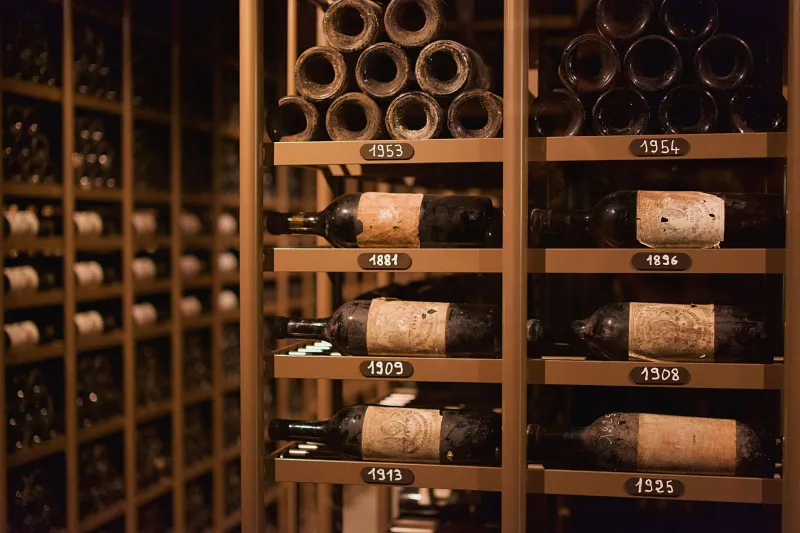
This narrative impulse is remarkably consistent among collectors who specialize in discontinued wines. They speak of their cellars not merely as repositories of value but as archives—physical records of American winemaking at specific moments in time. A bottle from a shuttered Napa estate is not simply a Cabernet Sauvignon of a given vintage; it is a document of how that estate's soils expressed themselves under a particular winemaker's stewardship, in a climate year that will never recur, filtered through a philosophy that no longer guides anyone's hand.
The Financial Calculus of Finitude
For all the romanticism that surrounds discontinued wines, their market behavior is governed by straightforward economics. Fixed supply meeting sustained or growing demand produces predictable outcomes. Bottles from beloved closed producers appreciate reliably, provided the wines were well-made and well-stored, and provided the producer's reputation has not been revised downward by time or critical reassessment.
The more nuanced financial question concerns which discontinued wines will appreciate meaningfully and which will simply remain curiosities. Not every closed winery produced wines of sufficient quality or cultural resonance to sustain collector interest across decades. The wines that endure in both cellar and memory tend to share certain qualities: they were distinctive rather than merely competent, they expressed a specific place or philosophy rather than a generalized style, and they attracted a community of devoted followers who continued to discuss and seek them out long after the last vintage was released.
The secondary market for these bottles—auction houses, private sales, specialized online platforms—has grown considerably more sophisticated over the past two decades. Provenance documentation has become essential. A bottle from a discontinued producer is only as valuable as the certainty of its storage history, and buyers have grown appropriately rigorous in demanding evidence of proper cellaring conditions before committing to significant purchases.
When Philosophy Discontinues a Wine
Not all lost wines are the product of closure. Some of the most mourned bottles in American collecting circles were discontinued not because a winery ceased to exist but because it chose to evolve. A California producer who spent fifteen years crafting high-alcohol, opulent Zinfandels before pivoting entirely to restrained, low-intervention Rhône varieties has, in a meaningful sense, discontinued the wine that originally built the reputation—even if the doors remain open and the same name appears on the label.
Collectors who followed these producers through their earlier chapters often describe a particular ambivalence about the transition. They may respect the artistic integrity behind the shift, even admire the courage required to abandon a successful formula. But they grieve the wine itself, and they hunt for remaining bottles of the earlier style with the same urgency they would bring to a true closure.
"The winery is still there," notes one collector who has assembled a deep vertical of pre-transition bottles from a respected Central Coast producer. "But the wine I fell in love with isn't. In every way that matters to me as a collector, it's been discontinued."
The Role of Memory in Valuation
There is a dimension to the discontinued wine's power that resists purely financial analysis: the role of personal memory in shaping what a bottle is worth to an individual collector. A wine consumed at a significant moment—a milestone dinner, a formative tasting, a shared experience that anchored a friendship—carries an emotional valuation that no auction estimate can fully capture.
When that wine is subsequently discontinued, the remaining bottles become something closer to relics than commodities. They are the physical residue of an experience that cannot be precisely replicated, and their scarcity intensifies rather than diminishes the attachment collectors feel toward them.
This emotional dimension also shapes how collectors speak about these wines to others. The discontinued bottle becomes a form of testimony—evidence that a particular winemaking vision once existed, that it was remarkable, and that its absence represents a genuine loss to the broader American wine narrative.
Preserving What Remains
For collectors committed to these vanished expressions, stewardship takes on a weight beyond ordinary cellar management. To hold a bottle from a closed producer is to accept a kind of custodianship—a responsibility to store it properly, to open it at the right moment, and to share it with people capable of understanding what they are tasting.
The best of these bottles, when finally opened, offer something that no currently available wine can provide: direct, sensory contact with a chapter of American wine history that has otherwise closed. That experience—however brief, however irreproducible—is precisely what drives collectors back to the secondary market, back to the auction catalogues, back to the patient, melancholy, and deeply rewarding pursuit of wines without a future.