Two Glasses, One Wine: How Winemakers Perceive What You Will Never Taste the Same Way
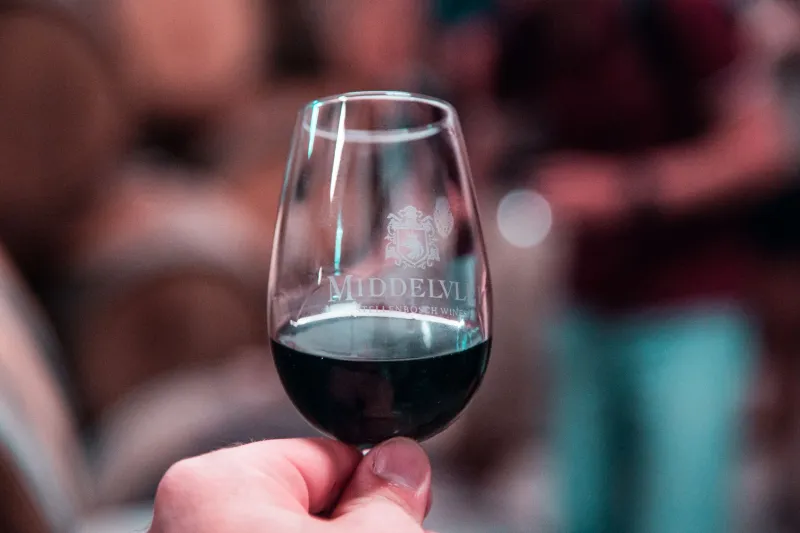
Pour the same Pinot Noir for a winemaker and a first-time wine drinker, and you have set up a fascinating natural experiment. The liquid in each glass is chemically identical. The experience, however, diverges almost immediately—shaped by memory, training, expectation, and an entirely different set of questions each person brings to the rim of the glass.
Understanding that divergence is not merely an intellectual exercise. It is, in fact, one of the most practical paths toward becoming a more perceptive, more satisfied wine drinker.
The Winemaker's Vocabulary Is Also a Perceptual Tool
Language does not simply describe sensory experience—it actively structures it. Researchers in sensory science have long noted that individuals with a richer, more precise vocabulary for flavor and aroma are measurably better at isolating and identifying those qualities in a blind setting. Winemakers, who spend years learning to distinguish between lactic and malic acidity, or between primary fruit aromas and the tertiary notes that emerge through oxidation, have essentially trained their brains to perceive what others experience as an undifferentiated impression of "good" or "not quite right."
Dr. Ann Noble's Aroma Wheel, developed at UC Davis in the 1980s, was an early formal recognition of this principle: give tasters a structured framework of descriptors, and their ability to identify specific compounds improves dramatically. When a winemaker detects "green bell pepper" in a Cabernet Sauvignon, they are identifying methoxypyrazines—compounds that accumulate when grapes are harvested before full phenolic ripeness. The consumer may simply sense something slightly herbal, or perhaps slightly off. The winemaker knows exactly what happened in the vineyard and when.
This is not a difference in taste buds. It is a difference in interpretive architecture.
Context as an Invisible Ingredient
Consumers encounter wine in highly variable settings: a celebratory dinner, a casual weeknight pour, a first date, a long-awaited vacation. Each of those contexts floods the experience with emotional and environmental noise that profoundly shapes perception. Studies in sensory psychology confirm that ambient lighting, background music, glassware, and even the price tag visible on a bottle all measurably alter how wine is rated by drinkers who believe they are evaluating the wine objectively.
Winemakers, by contrast, typically taste their own wines under deliberately neutral conditions—often in a laboratory-style tasting room, using standardized ISO glasses, in natural light, and without conversation. They are attempting to strip context away rather than be carried by it. The goal is diagnostic rather than hedonistic. They are not asking "Do I enjoy this?" as a primary question. They are asking "Is this what I intended? What does this reveal about the vintage? What will it become in three years?"
This distinction matters enormously. The winemaker is tasting through time, evaluating structure and potential rather than immediate gratification. A wine that seems austere or tannic to a consumer on release may register to its maker as precisely on course—tightly wound, yes, but architecturally sound and built for a decade of development.
The Bias No One Escapes—Not Even the Expert
It would be a mistake, however, to assume that professional knowledge confers perfect objectivity. Winemakers carry their own significant biases, and sensory scientists are candid about this. The most well-documented is what researchers call the "ownership effect"—the measurable tendency for creators to evaluate their own work more favorably than outside evaluators do. A winemaker who labored through a difficult harvest, who made dozens of micro-decisions about timing and technique, brings an invisible layer of narrative investment to every sip of the resulting wine.
Blind tastings exist, in part, to combat exactly this phenomenon. When winemakers taste their own wines alongside competitors' bottles without knowing which is which, their scores often shift. The wine they have been championing internally may suddenly seem less compelling when stripped of its identity. This is not dishonesty—it is the honest vulnerability of human cognition.
For consumers, this is actually encouraging information. It means that professional expertise, while genuinely valuable, does not translate into a form of tasting that is categorically superior. It is differently oriented. And the best elements of that orientation are learnable.
What You Can Borrow From the Winemaker's Approach
Several specific practices distinguish how trained professionals engage with wine, and each can be adopted—without a degree in enology—by any drinker willing to slow down.
Taste sequentially, not socially. Before conversation, before food, before anything else, spend sixty seconds with the wine alone. Swirl, observe color and viscosity, nose the glass without rushing, and take a small sip that you hold on the palate for several seconds before swallowing. Winemakers call this the "analytical pass," and it precedes any social or emotional engagement with the wine.
Ask structural questions. Rather than immediately reaching for fruit descriptors, consider the wine's architecture: Where does the acidity sit—bright and forward, or long and trailing? Are the tannins fine-grained or grippy? Does the finish extend, or does it drop off quickly? These are the questions winemakers use to assess a wine's backbone, and they reveal far more about quality and aging potential than flavor description alone.
Revisit the glass. Winemakers rarely evaluate a wine from a single taste. They return to it after fifteen minutes, after thirty. Exposure to air changes a wine's profile, and what seemed closed on first contact may open into something entirely different. Patience, in tasting as in cellaring, is a professional discipline.
Keep a tasting journal. Memory is the winemaker's most essential instrument. Every professional taster maintains records—not as a formality, but because the ability to compare this vintage against last, this producer against another, is what transforms isolated impressions into genuine expertise. Even informal notes, jotted on a phone, begin to build the experiential database that makes future tasting richer.
The Gap Is Also the Gift
There is something worth preserving in the consumer's relationship with wine that no amount of technical training should fully displace: the capacity for unmediated pleasure. A winemaker tasting their own Chardonnay is, in some meaningful sense, no longer able to taste it the way a stranger will on a warm August evening, years from now, without knowing anything about the drought that shaped it or the arguments over harvest timing.
That stranger's experience—immediate, emotional, uncomplicated by professional obligation—is the experience the wine was ultimately made for. The winemaker knows this. The best ones say so openly.
The goal, then, is not to become a winemaker in your own living room, but to borrow selectively from their discipline—to bring just enough structure to your tasting practice that the wine begins to speak more clearly, while leaving enough openness that it can still surprise you. That balance, between knowledge and wonder, is where the deepest appreciation lives.
At Greenwood Winery, we believe the story behind every bottle is most fully told when the person holding the glass has learned to listen carefully—and still allows themselves to simply enjoy what they hear.