Buying Rare American Wine Outside the Store: A Collector's Guide to the Secondary Market
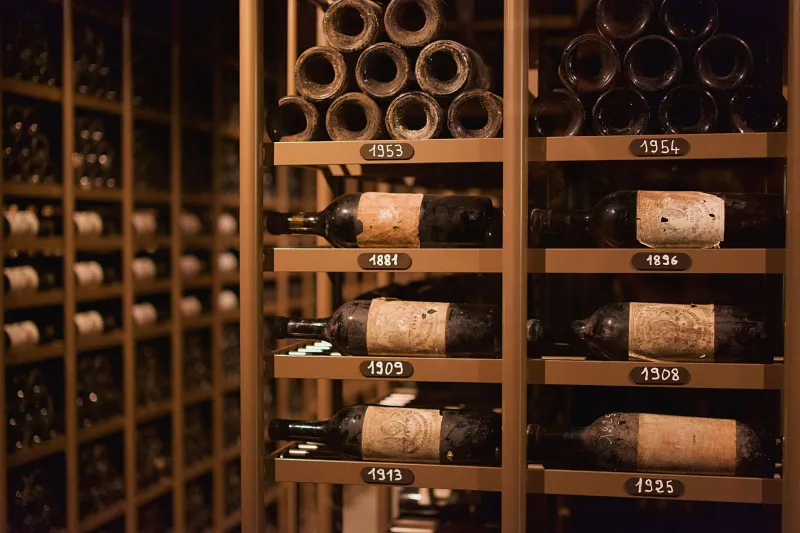
For the serious American wine enthusiast, there comes a moment when the retail shelf simply cannot offer what you are looking for. Perhaps you are searching for a ten-year-old Napa Valley Cabernet from a boutique producer whose allocation list you missed entirely. Perhaps a specific vintage of Oregon Pinot Noir that critics praised and collectors hoarded has all but vanished from conventional channels. Whatever the motivation, the secondary market—comprising auction houses, private collector sales, and online wine exchanges—has become an indispensable resource for those who refuse to settle.
Yet the rewards of buying outside the traditional retail channel come paired with genuine risks. Unlike a bottle purchased directly from a winery or a licensed retailer, a wine acquired on the secondary market carries a history you did not personally witness. That history matters enormously. Understanding how to investigate it thoroughly is the difference between a triumphant discovery and a costly disappointment.
Understanding What the Secondary Market Actually Is
The term "secondary market" encompasses several distinct channels. Major auction houses—both those with dedicated wine departments and the growing number of online-only platforms—represent the most structured end of the spectrum. Houses such as Hart Davis Hart, Acker Wines, and Zachys operate with established protocols for cataloging, condition reporting, and seller verification. Their reputation depends on maintaining those standards, which offers buyers a meaningful, if imperfect, layer of protection.
At the more informal end sit private collector sales, wine exchange platforms, and social communities where enthusiasts trade directly with one another. These transactions can yield extraordinary finds at fair prices, but they demand a higher degree of personal diligence from the buyer. There is no auction house standing between you and a seller whose storage practices you cannot independently confirm.
Knowing which channel you are operating in shapes every decision that follows.
The Primacy of Provenance
In the world of rare wine, provenance is everything. The word refers to the documented chain of custody a bottle has traveled since it left the winery—who owned it, where it was stored, and how it moved from one set of hands to another. A bottle with clear, verifiable provenance commands a premium for good reason: you are not merely purchasing wine, you are purchasing certainty.
When evaluating provenance, ask sellers direct questions and expect detailed answers. How long did they own the wine? Where was it stored—in a temperature-controlled cellar, a professional storage facility, or a residential space? Do they have original purchase receipts, shipping invoices, or documentation connecting the wine to a specific winery release? Reputable sellers will not find these questions intrusive. Evasive or vague responses, by contrast, should prompt serious reconsideration.
For wines purchased at auction, review the house's condition notes carefully. Many auction houses now include photographs of fill levels, capsule condition, and label integrity as standard practice. Treat these images as primary evidence, not mere decoration.
Spotting the Warning Signs of a Compromised Bottle
Counterfeiting in the fine wine market, while more commonly associated with European labels, is not absent from American wine. As domestic producers such as Screaming Eagle, Harlan Estate, and Sine Qua Non have achieved global recognition and stratospheric prices, they have attracted the unwanted attention of bad actors willing to exploit that prestige.
Physical inspection remains your first line of defense. Examine the fill level: a wine stored under proper conditions should show only minimal ullage appropriate to its age. Excessive headspace in a relatively young bottle is a red flag. Study the capsule for signs of tampering—small puncture marks, uneven edges, or a foil that appears mismatched to the bottle's stated vintage. Labels should be consistent with what the winery produced in that particular year; slight variations in font, color, or layout can indicate a reproduction.
Beyond the physical bottle, cross-reference the lot number or production code with any publicly available winery records. Some American producers have become increasingly transparent about release documentation precisely because they understand that their most devoted customers are navigating this market. A quick inquiry to the winery itself is never out of place when a purchase represents significant financial commitment.
Assessing Storage History with Rigor
Even an authentic bottle can be rendered undrinkable by poor storage. Heat is the primary enemy of wine's long-term integrity—a single exposure to temperatures above 75 degrees Fahrenheit can accelerate aging in ways that permanently alter a wine's character, stripping it of the complexity you paid to experience.
When buying from a private collector, ask whether the wine was stored in a dedicated cellar or climate-controlled unit, and whether that environment maintained consistent humidity levels. Fluctuating humidity leads to label damage and, more critically, can affect the integrity of the cork seal over time. If the seller stored the wine in a professional facility, request the name of that facility. Reputable operations maintain detailed records that can often be verified.
At auction, pay close attention to how the house describes storage provenance. Phrases such as "from a single-owner collection" or "from a professionally managed private cellar" carry meaningful weight when backed by a house whose reputation is on the line. Conversely, lots described with minimal storage detail warrant extra scrutiny.
Negotiating Fairly in a Maturing Ecosystem
The secondary market for American wine has matured considerably over the past decade, and pricing has become more sophisticated as a result. Reference tools such as Wine-Searcher and CellarTracker aggregate historical auction results and current market listings, giving buyers a reliable baseline against which to evaluate any offer.
Approach negotiation with data rather than instinct. If a private seller is asking a price that exceeds recent auction results for comparable bottles in similar condition, that discrepancy deserves a conversation. Sellers who are genuinely motivated—those liquidating portions of a cellar to fund new acquisitions or simply rationalizing an overcrowded collection—are often willing to negotiate meaningfully when a buyer demonstrates knowledge and seriousness.
For auction purchases, establish your ceiling before bidding begins and honor it. The competitive energy of a live or online auction is deliberately designed to encourage emotional decisions. The disciplined buyer who walks away from an overpriced lot is the buyer who finds genuine value in the next one.
Building Relationships That Open Doors
Perhaps the most underappreciated dimension of the secondary market is the relational one. The American wine collecting community, while growing, remains relatively intimate at its most serious levels. Sommeliers, auction house specialists, and winery club managers can all serve as connective tissue between buyers and sellers whose collections align with your interests.
Invest in those relationships deliberately. Attend tastings, engage with auction house preview events, and participate honestly in collector communities. The rare bottle that never makes it to a public listing often travels through a network of trusted contacts before it reaches anyone else. Positioning yourself within that network—as a knowledgeable, fair-dealing buyer—is a long-term strategy that consistently outperforms any single transaction.
The secondary market, approached with rigor and respect, is not a shadowy alternative to proper wine retail. It is, for the informed enthusiast, one of the most rewarding arenas in all of American wine culture. The bottles are real, the stories behind them are genuine, and the satisfaction of drinking something you tracked down with patience and intelligence is, in its own way, as complex and layered as the wine itself.