The Right Bottle for the Right Moment: How Sommeliers Think About Wine Beyond the Dinner Table
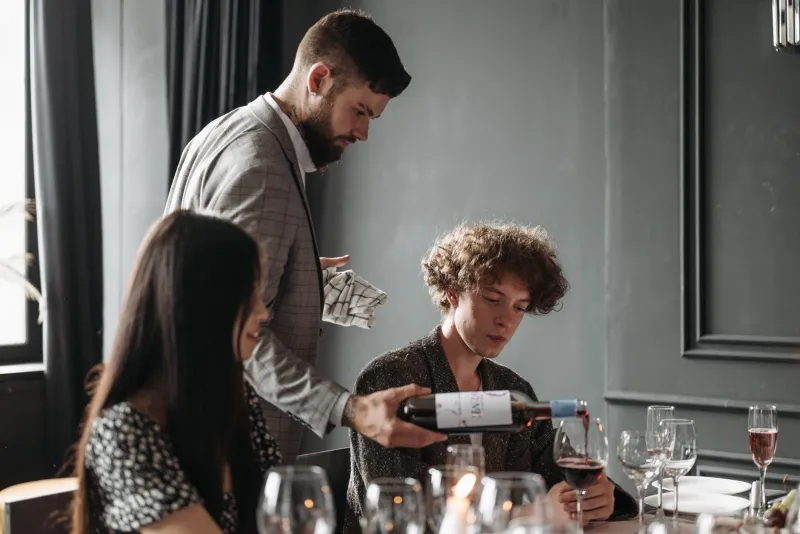
The pairing chart has its place. Knowing that a high-acid white wine will cut through the richness of a cream sauce, or that the tannins in a structured red will find equilibrium with a well-marbled steak, is genuinely useful knowledge. But ask a sommelier with twenty years of floor experience what guides their most meaningful recommendations, and the conversation will almost inevitably move away from the plate and toward something harder to quantify: the emotional temperature of the moment.
"I stopped thinking about food first a long time ago," says one sommelier at a celebrated New York City restaurant. "I think about what kind of night this is for the people sitting across from me. The food is almost secondary."
This shift in perspective—from wine as a culinary complement to wine as an emotional register—is one of the more profound things that serious experience with wine tends to produce. It is also, for the enthusiast who has not yet made that transition, one of the most accessible paths to a richer relationship with the bottles they choose.
The Occasion as the First Variable
Professional sommeliers develop, through sheer repetition, a rapid-assessment capacity for reading the nature of a dining occasion. A table celebrating an anniversary reads differently from a table of colleagues concluding a difficult negotiation, which reads differently from a solo diner seeking quiet restoration after a long week. Each of these occasions calls for a different kind of wine—not because of what is being eaten, but because of what is being felt.
For celebrations, the instinct toward Champagne or sparkling wine is not merely conventional—it reflects something genuine about the relationship between effervescence and elevation of mood. The bubbles are not incidental. They are the point. But a sommelier thinking carefully about a specific celebration might distinguish between the exuberant joy of a birthday and the more complex, reflective satisfaction of a milestone anniversary. The former might call for something bright and immediately generous; the latter for a wine with depth and earned complexity—a vintage Champagne, perhaps, or a well-aged American sparkling wine from California's Anderson Valley, whose slower development mirrors the arc of a life well-lived.
For occasions of grief or quiet solitude, the instinct is almost universally toward wines of subtlety and restraint. "You don't want a wine that demands your attention when someone is already carrying something heavy," explains a sommelier based in Chicago. "You want something that sits beside them. Gentle tannins. Soft fruit. Nothing that asks too much."
This is, in essence, a philosophy of hospitality applied to wine selection—the understanding that a bottle can serve an emotional function as precisely as it serves a culinary one.
Mapping Wine to Life's Chapters
Beyond individual occasions, the most thoughtful sommeliers think about wine in terms of life chapters—the longer arcs of experience that shape what a person needs from a bottle at a particular stage of their life.
A young person encountering fine wine for the first time is, in this framing, not simply a novice drinker. They are someone at the beginning of a relationship with one of the most complex sensory languages available to human experience. The wines appropriate to that chapter are not necessarily simple ones—but they should be legible. Wines with clear, expressive character that invite curiosity rather than demanding prior knowledge.
Someone in the middle chapters of a wine life—comfortable with the vocabulary, beginning to develop genuine preferences—benefits from wines that challenge and expand, that introduce new regions, varieties, or production philosophies. This is the chapter for taking risks with a bottle, for ordering something unfamiliar, for developing the palate's range.
And for the experienced enthusiast who has arrived at genuine connoisseurship, the wines of this chapter often circle back toward restraint and precision—wines that have nothing to prove and everything to express. The flashy, high-scoring bottles that once seemed essential give way to a preference for wines of integrity and place.
The Framework: Four Questions Before You Choose
For the enthusiast who wants to develop their own emotional and contextual approach to wine selection, a simple framework can serve as a starting point. Before reaching for a recommendation or a pairing guide, consider four questions.
What is the emotional register of this occasion? Is it celebratory, contemplative, convivial, intimate, or restorative? Each of these calls for a different kind of wine. Celebratory occasions reward generosity and brightness. Contemplative ones reward complexity and quiet depth. Convivial gatherings reward accessibility and versatility. Intimate occasions reward wines with character and conversation-worthiness. Restorative moments reward gentleness and ease.
Who is sharing this bottle, and what do they bring to it? A wine that is perfect for a solo evening of reflection may be entirely wrong for a table of people encountering the producer for the first time. The audience matters. A bottle chosen for a group of friends who share your enthusiasm for natural wine is a different choice from one selected for a family dinner where the range of experience and preference is wide.
What do you want to remember? Wine has a remarkable relationship with memory. The bottles we associate with significant moments tend to encode those moments more deeply than the moments themselves might otherwise warrant. Choosing a wine with this in mind—selecting something that deserves to be remembered—is not sentimentality. It is a recognition of wine's genuine power as a mnemonic object.
What season are you in? Not merely the calendar season, though that matters, but the emotional season. There are periods in life that call for boldness and exploration, and periods that call for comfort and familiarity. Allowing your wine choices to reflect those rhythms honestly produces a more authentic relationship with the bottles you open.
Learning From the Professionals Without Becoming One
The sommelier's capacity for reading a room and matching a bottle to its moment is, at its core, a developed form of attentiveness—an ability to ask the right questions before reaching for the wine list. That attentiveness is available to anyone willing to cultivate it.
The practical application is simpler than it might appear. Before opening a bottle for any occasion of significance, pause for a moment to consider what the occasion actually is—not just what is being served for dinner, but what kind of evening this is, what it is asking for, what it deserves. Then let that consideration guide your selection.
The wine list, the cellar, the retail shelf—all of these contain bottles appropriate to every possible emotional register. The skill is not in knowing which wine pairs with which dish. It is in knowing which bottle belongs to this particular moment in your particular life. That is the knowledge that turns a collection of bottles into something closer to a personal library—each volume chosen not merely for its quality, but for what it has to say to you, right now, in exactly this chapter.